
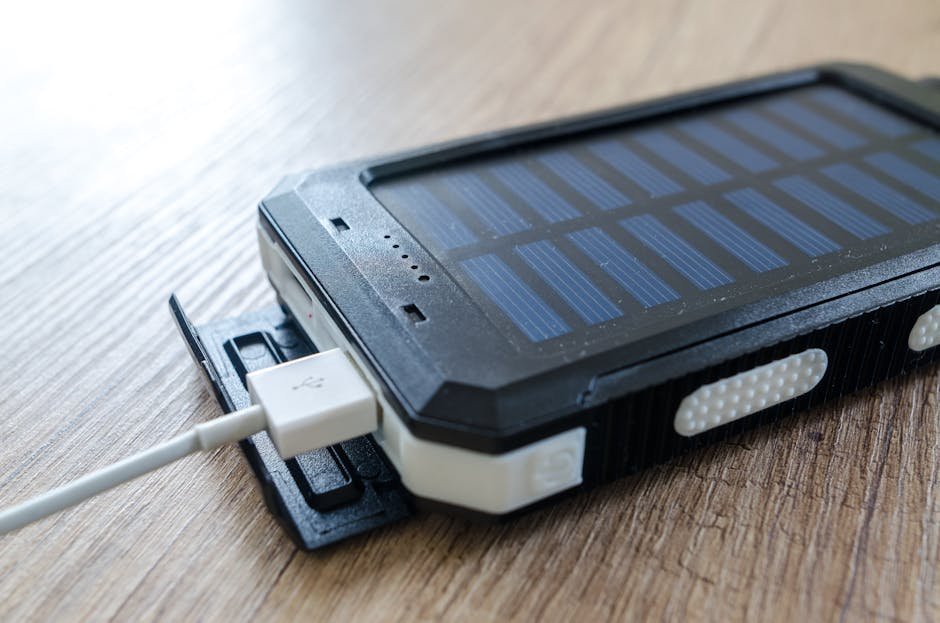
Solar-Powered Chargers for Smartphones: Are They Worth the Sunlight Investment?
The relentless drain of smartphone batteries fuels a constant search for charging solutions. While wall adapters and power banks remain ubiquitous, solar-powered chargers are gaining traction as a more sustainable and potentially cost-effective alternative. But do these sunshine-sipping devices truly deliver, or are they just a fleeting fad riding the wave of eco-consciousness? This in-depth review explores the capabilities, limitations, and real-world value of solar-powered chargers for smartphones.
Understanding the Technology: How Solar Chargers Work
At their core, solar chargers utilize photovoltaic (PV) cells to convert sunlight into electricity. These cells, typically made from silicon, generate an electrical current when photons (light particles) strike them. The electricity produced is then either used directly to charge a connected device or stored in an internal battery for later use.
The efficiency of this conversion is a crucial factor determining the charger’s performance. Efficiency, measured as the percentage of sunlight converted into usable electricity, varies widely depending on the quality of the solar panel technology used. Premium monocrystalline panels generally offer higher efficiencies (17-22%) compared to polycrystalline panels (15-17%), making them more effective in low-light conditions and producing more power from the same surface area. Amorphous silicon panels, while the cheapest, have the lowest efficiencies (6-8%) and are less effective for smartphone charging.
Beyond the panels themselves, the circuitry within the charger also plays a vital role. Efficient charging requires a stable voltage and current, which is managed by the charger’s internal components. Low-quality circuitry can lead to inconsistent charging, potentially damaging the phone’s battery over time.
Types of Solar Chargers: A Breakdown of Options
The market offers a diverse range of solar chargers, each with its own strengths and weaknesses. Understanding these different types is crucial for selecting the right charger for your needs.
-
Foldable Solar Chargers: These chargers typically feature multiple solar panels hinged together, allowing them to fold into a compact package for portability. They are ideal for backpacking, camping, and other outdoor activities where space is limited. The larger surface area provided by multiple panels allows for faster charging compared to smaller, single-panel chargers.
- Pros: Highly portable, relatively fast charging speed, durable construction.
- Cons: Can be bulky when unfolded, require direct sunlight for optimal performance.
-
Solar Power Banks: These combine a solar panel with an internal battery. The panel charges the battery, which then charges your phone. This allows you to store solar energy for later use, even when sunlight is unavailable. The battery capacity is a key factor to consider, with larger capacities allowing for multiple smartphone charges.
- Pros: Can store solar energy for later use, convenient for on-the-go charging, often feature multiple charging ports.
- Cons: Solar charging can be slow, internal battery adds weight and bulk, battery life degrades over time.
-
Window-Mounted Solar Chargers: Designed to attach to windows using suction cups, these chargers are best suited for stationary use, such as in a car or at home. They are often smaller and less powerful than foldable chargers, but they can be a convenient way to top up your phone’s battery while indoors.
- Pros: Convenient for stationary use, often compact and lightweight, can be used indoors near a window.
- Cons: Slow charging speed, limited portability, dependent on window orientation and sunlight availability.
-
Solar Cases and Backpacks: These integrate solar panels into the design of a phone case or backpack. While aesthetically appealing, the small panel size often limits their charging capabilities. They are best suited for maintaining a charge rather than rapidly replenishing a depleted battery.
- Pros: Convenient and integrated design, ideal for maintaining a charge, adds minimal bulk.
- Cons: Slow charging speed, limited power output, often expensive.
Performance Considerations: Sunlight, Wattage, and Charging Time
The effectiveness of a solar charger is directly linked to the intensity of sunlight it receives. Direct, unobstructed sunlight is crucial for optimal performance. Cloudy conditions, shade, and even the angle of the sun can significantly reduce the charger’s output.
Wattage, which measures the power output of the solar panel, is another critical factor. A higher wattage generally translates to faster charging times. However, it’s important to note that the actual charging speed will also depend on the efficiency of the charger’s circuitry and the phone’s charging capabilities.
To realistically assess charging times, consider the following:
- Average smartphone battery capacity: Ranging from 3000mAh to 5000mAh.
- Solar panel wattage: Typically ranges from 5W to 20W or higher for foldable chargers.
- Charging efficiency: Losses occur during energy conversion and transfer.
Under ideal conditions, a 10W solar charger might take several hours to fully charge a smartphone. In less-than-ideal conditions, the charging time could be significantly longer, potentially requiring a full day of sunlight.
Durability and Weather Resistance: Handling the Elements
Given their intended use in outdoor environments, solar chargers should be durable and weather-resistant. Look for chargers with rugged construction, waterproof or water-resistant materials, and UV protection to prevent degradation of the solar panels.
Many chargers are rated according to the Ingress Protection (IP) code, which indicates their level of protection against dust and water. An IP65 rating, for example, means the charger is protected against dust ingress and can withstand water jets from any direction.
The frame and casing of the charger should also be robust enough to withstand impacts and scratches. Reinforced corners and durable hinges are desirable features for foldable chargers.
Cost vs. Benefit: Is It a Smart Investment?
Solar chargers range in price from relatively inexpensive models to high-end options with advanced features. The cost-effectiveness of a solar charger depends on your specific needs and usage patterns.
For occasional use during camping trips or emergencies, a mid-range solar power bank might be a worthwhile investment. However, if you rely heavily on your smartphone and require fast and reliable charging, a high-wattage foldable solar charger or a combination of solar charging and a large-capacity power bank might be more suitable.
Consider the long-term cost savings associated with reduced reliance on grid electricity. While the initial investment might be higher than a traditional charger, a solar charger can potentially pay for itself over time, especially for those who spend a significant amount of time outdoors.
Potential Drawbacks and Limitations
Despite their advantages, solar chargers have limitations that need to be considered:
- Weather Dependency: Performance is highly dependent on sunlight availability.
- Slow Charging Speed: Solar charging is generally slower than wall charging.
- Bulky Design: Foldable chargers can be bulky when unfolded.
- Battery Degradation: Internal batteries in solar power banks degrade over time.
- Heat Sensitivity: Excessive heat can reduce the efficiency and lifespan of solar panels.
Making the Right Choice: Factors to Consider
When choosing a solar charger for your smartphone, consider the following factors:
- Panel Efficiency: Opt for monocrystalline panels for higher efficiency.
- Wattage: Choose a wattage that matches your charging needs.
- Portability: Select a charger that is easy to carry and store.
- Durability: Look for rugged construction and weather resistance.
- Battery Capacity (if applicable): Choose a battery capacity that meets your charging requirements.
- Price: Balance cost with performance and features.
- Reviews: Read user reviews to get real-world feedback.
By carefully evaluating these factors, you can make an informed decision and select a solar charger that effectively meets your smartphone charging needs and aligns with your sustainability goals. Ultimately, the “worth” of a solar-powered charger depends on individual usage patterns, environmental consciousness, and the willingness to embrace a charging solution that prioritizes sustainability over sheer speed.
Leave a Reply